A ring sizer gives you an accurate reading as long as you use the right type for your situation and avoid the handful of mistakes that throw off almost every first attempt. The tool itself is simple. Getting a number you can actually trust from it takes a bit more care than most instructions let on.
This guide covers all three common types of ring sizer, how to use each one correctly, and the specific printing mistake that quietly ruins more printable sizers than people realize.
The Three Types of Ring Sizer
| Sizer Type | How It Works | Accuracy | Reusable |
|---|---|---|---|
| Plastic adjustable sizer | A belt like strip tightens around the finger until snug | Good | Yes |
| Metal ring sizer set | A set of real metal rings in standard sizes, tried on one by one | Very good | Yes |
| Printable paper sizer | A printed strip or ring shape measured against your finger | Good, if printed at the correct scale | No |
Metal sizer sets tend to give the most realistic feel, since they are solid rings rather than a flexible strip, which means they respond to your knuckle and finger shape the same way an actual ring would. Plastic adjustable sizers are the most common and convenient option for a quick check. Printable sizers are free and widely available, but they carry one specific risk the other two do not.
Using a Plastic Adjustable Sizer
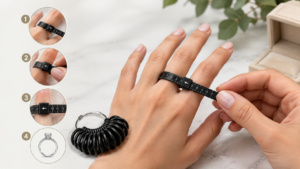
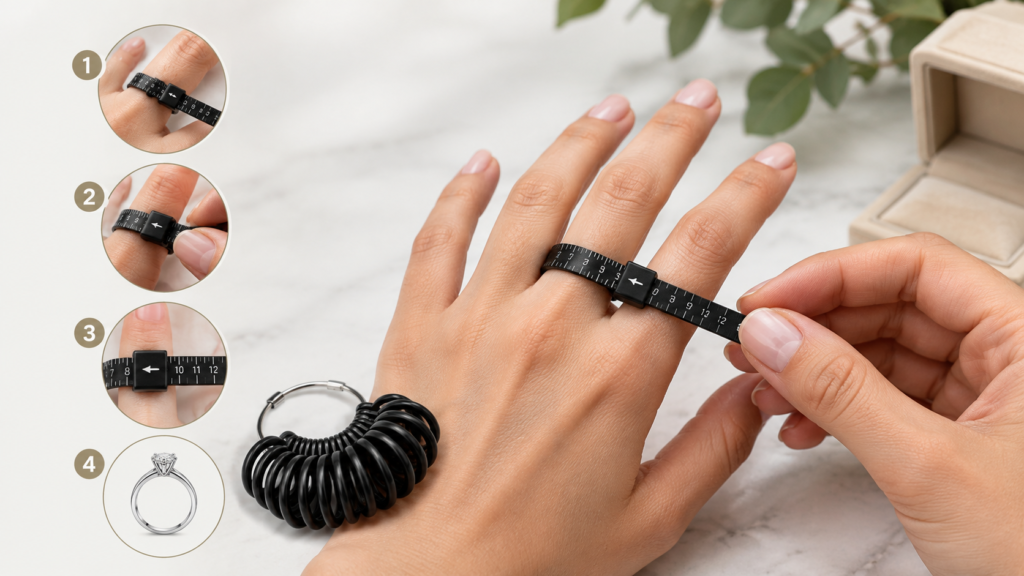
Slide the closed loop over your finger and gently pull the strip until it sits snug against your skin, not loose enough to spin freely but not tight enough to leave a mark. Read the size indicator at the point where the strip overlaps or locks into place. Slide it off over the knuckle the same way a real ring would come off, and note whether it passes the knuckle with a bit of resistance or catches noticeably, since that tells you whether the size you landed on will actually work for a solid ring and not just the flexible strip.
Using a Metal Ring Sizer Set
Starting from a size you expect to be close, slide each ring on over the knuckle to the base of the finger. The correct size should pass over the knuckle with some gentle resistance, then sit comfortably at the base without spinning freely or pressing into the skin. If a size slides on with no resistance at all, try a half size down. If it catches hard at the knuckle or will not pass at all, try a half size up. Testing two or three sizes around your estimate, rather than only the first one you try, is what actually gets you a confident answer.
Using a Printable Sizer Correctly
This is the method where people most often get an inaccurate result, and almost always for the same reason: incorrect print scale. Printers frequently default to “fit to page” or “shrink to fit” settings, which quietly resizes the printed chart by a small percentage to fit your paper size. A chart printed even five percent smaller than intended will read a meaningfully wrong size, since the actual physical ruler markings are no longer the correct length.
Before trusting a printed sizer, always check it against a real ruler. Most printable ring sizers include a small reference line labeled with its intended length, often exactly one inch or exactly 25.4mm. Measure that specific line with a separate ruler after printing. If it does not match exactly, go back into your printer settings, select “actual size” or “100%” instead of any automatic fit option, and print again before using the chart.
Once you have confirmed the print scale is correct, wrap the cutout strip around the base of your finger the same way you would with string or paper, and read the size where it overlaps.
Checking the Result Properly
Whichever type of sizer you use, do not trust a single reading on its own. Test the same finger again, ideally at a different time of day, and confirm the two results land close together. A sizer should feel snug enough to resist sliding off on its own, loose enough to pass over the knuckle without real effort, and comfortable enough that you forget it is there within a few seconds of putting it on. If a size technically fits but feels tight at the knuckle specifically, sizing up slightly is usually the safer call, since a ring that cannot comfortably clear the knuckle is more likely to cause problems long term than one that is a touch roomy.
Common Mistakes With Ring Sizers
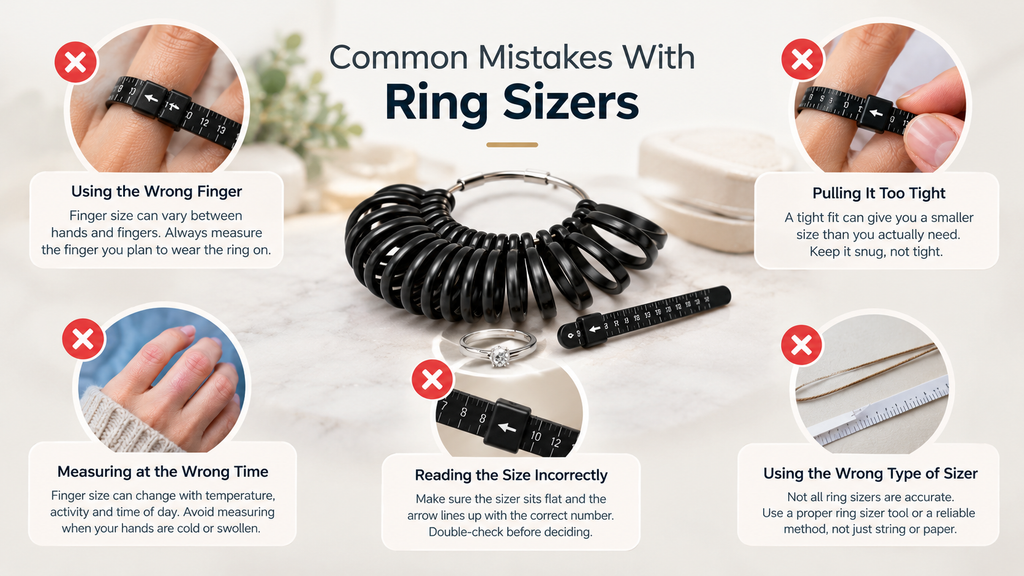
Testing only one size. Confirming the fit against a neighboring size up and down is what actually tells you whether you landed on the right one, rather than just a close one.
Ignoring the knuckle test. A sizer that fits snugly at the base but will not pass the knuckle comfortably is not actually the right size, even if the base measurement looks correct.
Trusting an unchecked printed scale. As covered above, this is the single most common source of error with printable sizers specifically, and it is also the easiest to fix once you know to check for it.
Measuring cold or swollen fingers. Any sizer type will give a misleadingly small reading if your fingers are cold, or a misleadingly large one if they are swollen from heat or activity.
When a Sizer Alone Is Not Quite Enough
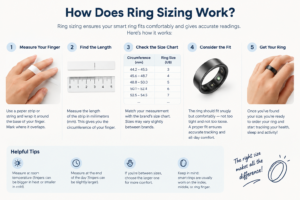
A ring sizer gives you a solid number, but it does not account for how band width and ring profile change the way that number actually feels once worn. A wide band in your sizer confirmed size can still feel tighter than expected. Our guide on how ring sizing works covers those design factors in more depth, and our breakdown of whether a quarter size makes a difference is useful if your sizer result falls right between two sizes and you are not sure which way to round.
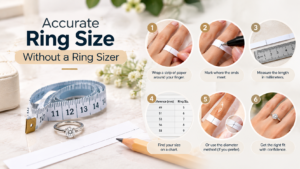
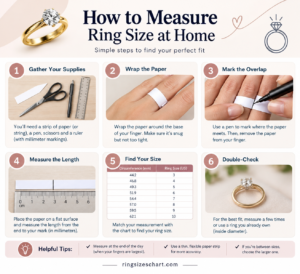
If you do not have access to a physical sizer at all, our full guide on how to measure ring size at home covers the string and paper method in detail, and our step by step walkthrough of measuring with a tape measure is a solid alternative if you have one on hand. For an instant conversion once you have any measurement at all, our free ring size calculator handles the math for you.
Frequently Asked Questions
Are metal ring sizer sets more accurate than plastic ones?
Generally yes, since a solid metal ring behaves exactly like a real ring would on your finger, while a flexible plastic strip can shift slightly during the reading.
How do I know if my printed ring sizer is the correct scale?
Check the reference line included on most printable sizers against a real ruler. If your printer defaulted to a fit to page setting, the measurement will be off, and you should reprint using an actual size or 100% setting instead.
What if a size fits at the base but not over the knuckle?
Size up slightly. A ring that cannot comfortably clear the knuckle will be difficult to remove and uncomfortable to wear regularly, even if the base measurement seemed correct.
Can I reuse a printable ring sizer later?
Paper sizers wear out and can stretch or crease with repeated use, which affects accuracy. A plastic or metal sizer holds up much better for repeat measurements over time.
Should I size for the knuckle or the base of the finger?
Both need to be considered together. The ring has to pass over the knuckle to go on, but ultimately needs to sit comfortably at the base, so a good sizer check confirms both points rather than just one.
Final Thoughts
A ring sizer is only as good as how carefully it is used. Metal sets give the most realistic feel, plastic sizers are the most convenient, and printable sizers are free but depend entirely on getting the print scale exactly right. Check your result against a knuckle test, confirm it more than once, and you will land on a size you can actually trust, regardless of which type of sizer you reach for.