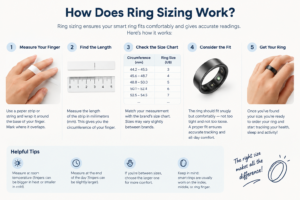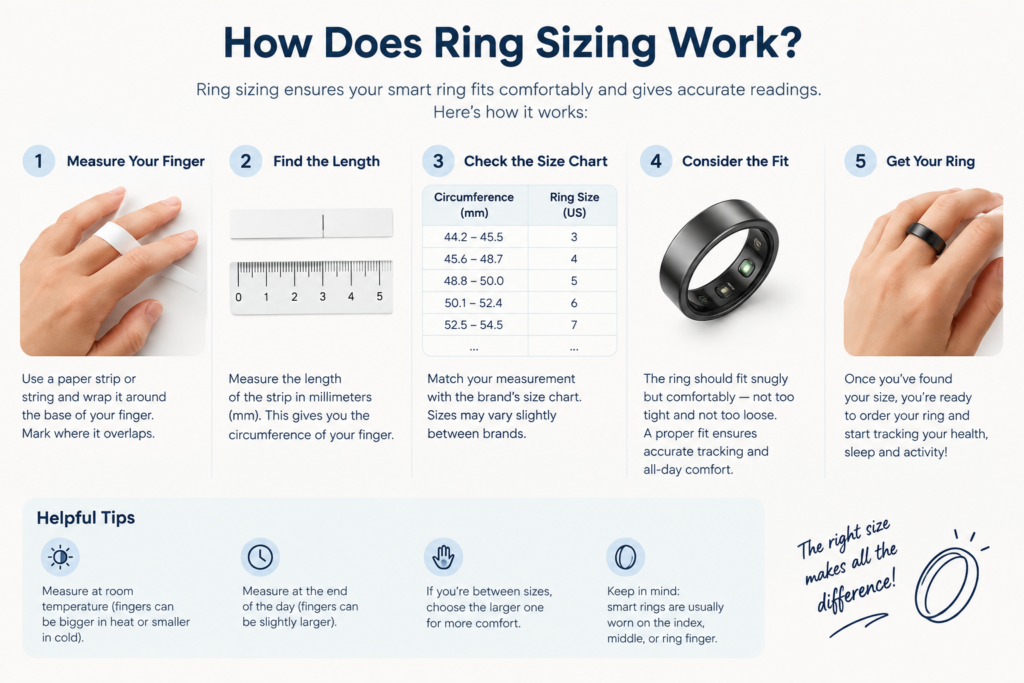
Ring sizing works by measuring the circumference of your finger, the distance all the way around it, and matching that number to a standardized chart. Every system in the world, whether it uses numbers, letters, or millimeters, is built on that same basic idea. The confusing part is not the concept itself, it is that different countries display the same measurement in completely different ways, and a handful of real world factors keep the number from being quite as fixed as it looks on paper.
This guide covers the full picture: how the systems actually work, how sizing is measured in practice, why it is never perfectly exact, and the most common misunderstandings that lead people to order the wrong size.
What Ring Sizing Actually Measures
At its core, ring sizing answers one question: how big does the inside of a ring need to be to comfortably pass over your knuckle and sit securely at the base of your finger? That inside space can be described two ways, by its circumference or by its diameter, the straight line distance across it. Circumference is the true standard, since it reflects the full loop of metal that actually wraps around your finger, though diameter is often easier to measure directly. Our full breakdown of diameter versus circumference covers exactly how the two relate and when each one is more useful.
The Major Sizing Systems Explained
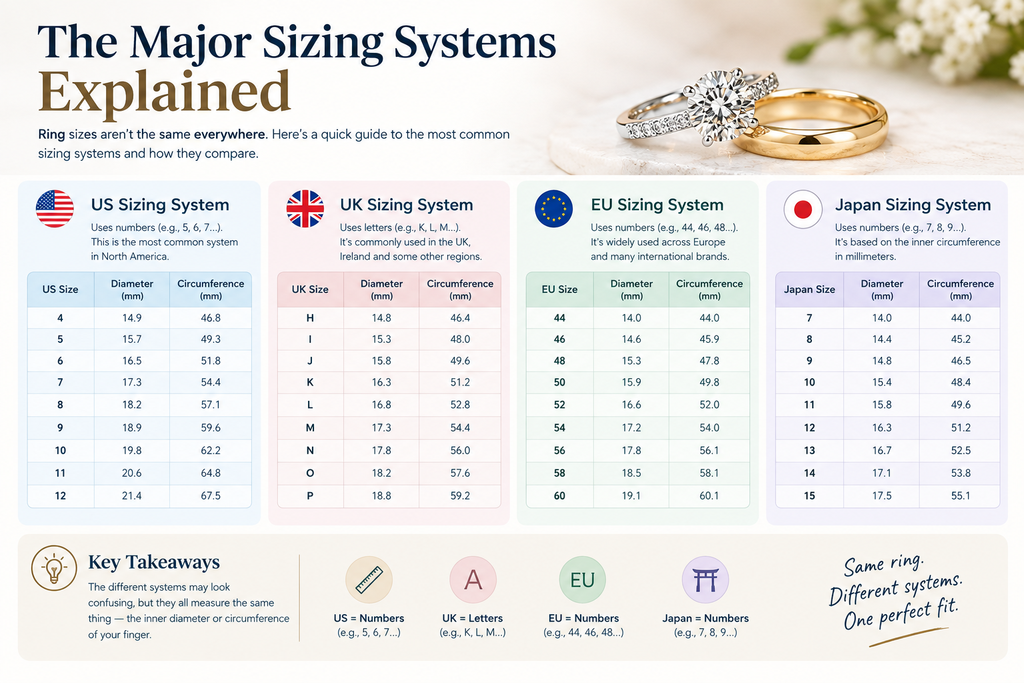
Although the numbers and letters look different, every system below measures the same underlying circumference.
| US / Canada | UK / Australia | EU | Japan |
|---|---|---|---|
| 6 | L | 52 | 12 |
| 7 | N | 55 | 14 |
| 8 | P | 57 | 16 |
United States and Canada use a numeric scale, typically from size 3 to 13, with half sizes common for finer adjustment.
United Kingdom and Australia use letters starting near A and increasing alphabetically, with each letter representing a slightly larger circumference than the one before it.
Europe uses the circumference itself, in millimeters, as the size number, which makes it the most literal of the major systems.
Japan uses its own numeric scale that does not line up directly with the US numbers, which is why converting between the two needs a proper chart rather than a rough guess. Our Japan ring size chart covers the full conversion if you are ordering from a Japanese retailer.
Several countries in Southeast Asia, including Indonesia, use a related but distinct numeric scale as well. If you are shopping locally in that region, our Indonesia ring size chart walks through the conversion in detail.
How a Size Is Actually Determined
In practice, there are only really two starting points, and everything else builds on one of them.
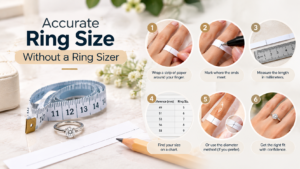
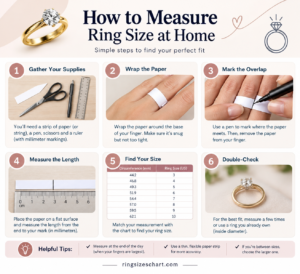
Measuring your finger directly gives you circumference. Wrapping a flexible tape, a strip of paper, or a piece of string snugly around the base of your finger and reading the length at the point where it overlaps gives you a number you can compare straight against a chart. Our step by step guide on measuring ring size with tape covers exactly how to do this accurately at home.
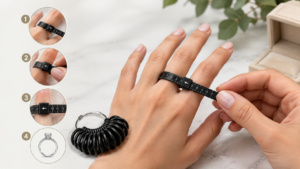
Measuring an existing ring gives you diameter, which then needs converting to circumference or comparing against a diameter column on a proper chart. This works well if you already own a ring that fits the intended finger comfortably.
Either measurement, entered into our free ring size calculator, converts instantly into US, UK, EU, and Japan sizes without needing to do any of the math yourself.
Why Ring Sizing Is Never Perfectly Exact
Even a careful measurement is only a snapshot, because the thing being measured, your finger, is not perfectly consistent.
Temperature and time of day shift finger size slightly, larger in heat, smaller in cold, and often a touch larger by the end of the day than first thing in the morning. Genuine longer term changes matter too. Weight shifts, pregnancy, and gradual joint changes as people get older are all common, normal reasons a size that fit perfectly a few years ago no longer does. Our guide on whether ring size changes with age breaks down which of these changes tend to be temporary and which are more lasting.
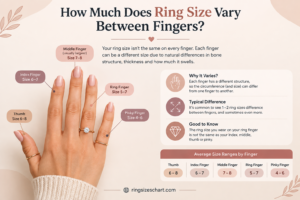
Finger to finger differences add another layer. The same hand can easily span a full size or more between its largest and smallest finger, which is why measuring the exact finger a ring is meant for matters more than most people expect. Our breakdown of how much ring size varies between fingers covers the typical gap finger by finger.
How the Ring Itself Changes the Fit
Sizing is not only about the finger. The ring’s own design plays a real role in how a given size actually feels.
Band width is the biggest factor. A wider band contacts more of the finger and creates more resistance passing over the knuckle, so the same labeled size can feel noticeably tighter in a wide band than a thin one. This is also why a change as small as a quarter size can matter more than it sounds, especially on wider styles. Our guide on whether a quarter ring size makes a difference breaks down exactly how much that small an adjustment actually moves the fit.
Ring profile matters too. A rounded, comfort fit interior slides over the knuckle more easily and tends to feel slightly roomier than a flat interior band in the same labeled size.
Why Half Sizes Exist
A full size step is a bigger jump than it sounds once it is actually on your finger, close to a millimeter and a half of extra room around the whole circumference. Half sizes exist to close that gap, giving a finer adjustment for the fingers that fall right between two standard sizes. Not every country offers half sizes on every style, but where they are available, they are usually worth the small extra step of checking, particularly for a ring that will be worn daily.
Common Misunderstandings Worth Clearing Up
A few myths cause more wrong orders than almost anything else in ring sizing.
“My size is the same on every finger.” It is not, often by a full size or more between the largest and smallest finger on the same hand.
“Once you know your size, it stays the same forever.” For many people it does stay fairly stable, but weight changes, pregnancy, and age related joint changes are common enough that checking again every few years is a reasonable habit, not an overreaction.
“A resize can always fix a sizing mistake.” Usually, but not always. Some settings, particularly eternity bands and tension settings, resist resizing significantly, and some hard metals like tungsten cannot be resized at all. Our guide on what to do if an engagement ring no longer fits covers which situations call for a resize versus a different fix, and our breakdown of what resizing typically costs is worth reading before assuming a fix is simple or cheap.
“The exact same size number always feels the same.” Band width and profile alone can make two rings in the same labeled size feel meaningfully different, which is a large part of why sizing charts should be treated as a strong starting point rather than a guarantee.
When Ring Sizing Works Best
Sizing is most reliable when a few simple habits are followed together rather than any single one on its own: measuring at a normal time of day rather than right after waking or exercising, measuring the specific finger the ring is actually intended for, checking the measurement more than once, and accounting for the width and profile of the ring itself rather than assuming the number alone tells the whole story.
Frequently Asked Questions
Is ring sizing based on diameter or circumference?
Circumference is the true underlying standard, though diameter is commonly measured too since it is easier to read directly off an existing ring.
Do all countries use the same ring sizing system?
No. The US, UK, EU, and several Asian countries including Japan each use their own scale, though all of them are built around the same physical circumference measurement underneath.
Why does the same size feel different in two different rings?
Band width and interior profile both change how a given size actually feels on the finger, even when the underlying circumference is identical.
How often should I recheck my ring size?
Checking every couple of years, or after a significant weight change, pregnancy, or noticeable change in how an existing ring fits, is a reasonable habit for most people.
Can I trust an online ring size calculator?
Yes, as long as the measurement you enter is accurate. A calculator can only convert the number you give it, so a careful measurement matters more than which tool does the conversion.
Final Thoughts
Ring sizing works by translating one simple physical measurement, the circumference of your finger, into whichever system a specific brand or country happens to use. The concept is straightforward. What makes it feel complicated is everything layered on top: multiple sizing systems, normal daily and long term changes in finger size, and the ring’s own design all affecting how a number actually feels once it is worn. Understanding those layers, rather than just the chart itself, is what actually gets you to a ring that fits.