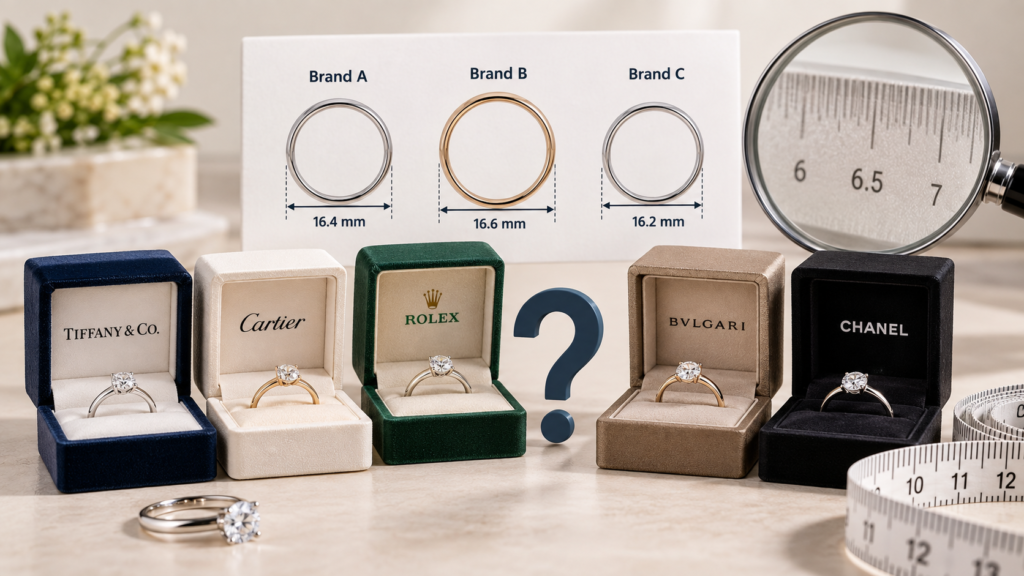
Yes, ring sizes can feel noticeably different from one brand to the next, even though the underlying sizing systems are technically standardized. A US size 7 is defined by a specific inner circumference no matter who makes the ring, but the ring wrapped around your finger is never just that one number. Band width, interior shape, metal thickness, and small manufacturing differences all sit on top of the size and change how it actually feels.
Here is what genuinely causes that gap between brands, how much of an effect it really has, and how to shop a new brand without guessing.
The Size Itself Is Standardized, the Fit Is Not
Every major sizing system defines an exact measurement. In the US and Canada, a full size step corresponds to a set increase in inner circumference. In the UK, letter sizes map to the same kind of fixed measurement. In Europe, the number itself is the circumference in millimeters. On paper, a size 7 ring from any two brands should have an identical inner circumference.
In practice, that number is only one input into how a ring feels once it is actually on your hand. The design built around that circumference is where brands genuinely start to differ.
What Actually Causes the Difference
Band width. This is the single biggest factor, and it is not subtle. A wider band contacts more of your finger, which creates more resistance going over the knuckle and more pressure once it is seated. As a rough guide, jewelers commonly suggest sizing up about half a size for every two to three millimeters of extra band width beyond a standard thin band. So a brand known for slim, delicate rings and a brand known for chunky statement bands can both claim size 7, yet feel completely different once worn.
Comfort fit versus flat interior. Comfort fit rings have a gently rounded interior that slides over the knuckle more easily and tends to feel slightly roomier than a flat interior band in the same labeled size. If one brand you are comparing uses comfort fit construction and another does not, that alone can account for a noticeable difference.
Metal thickness and weight. A heavier, more substantial band can feel tighter than a lighter one at the same circumference, simply because there is more material pressing against the finger. This shows up most with durable metals like tungsten and titanium, which are often made slightly thicker for strength.
Manufacturing tolerance. Mass produced rings allow for small, normal variation in the exact inner diameter from piece to piece. Higher end and made to order jewelers typically hold tighter tolerances than fast fashion or costume jewelry brands, which can mean more consistency size to size.
International rounding. A brand that manufactures overseas and converts between sizing systems, US to EU for example, can end up with small rounding differences between the printed size and the actual measurement, especially at half sizes.
What Customers Actually Report
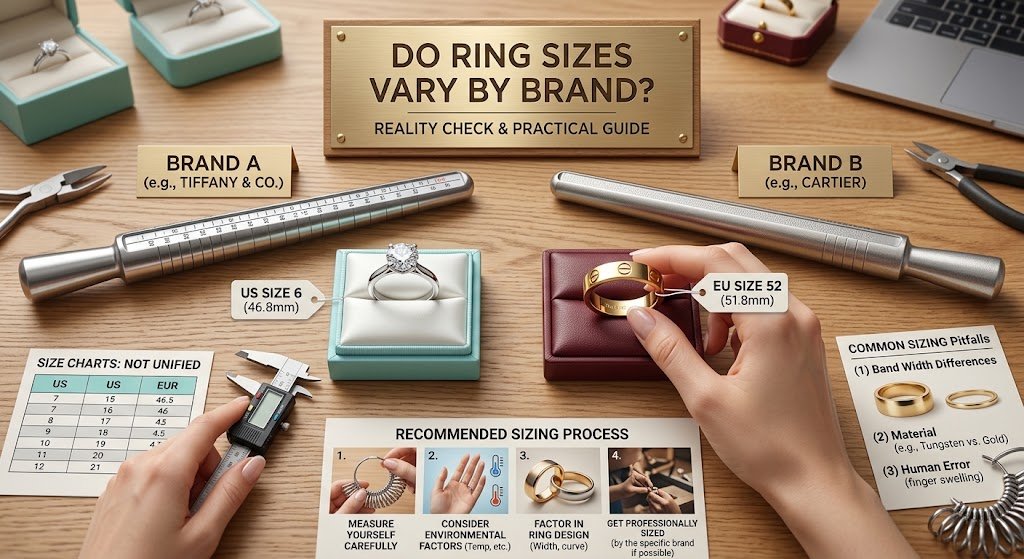
Formal sizing charts are consistent, but real buyer experience is more mixed than most sizing guides admit, and it is worth being upfront about that rather than pretending every brand fits with total precision. Feedback across jewelry forums shows some buyers finding a particular brand’s wider bands run snug and needing to size up half a size, while other buyers of the same brand report their rings fitting true to size with no issue at all. That is not a contradiction, it usually comes down to the specific style and width of the ring in question rather than the brand as a whole.
The practical takeaway is that reviews and forum experiences are a useful data point, but they are not a substitute for checking a brand’s own size chart and, where possible, trying a ring on or ordering from a retailer with a straightforward exchange policy. If you are comparing a specific brand’s chart against the standard system, our Gucci ring size chart is a good example of how one brand’s published sizing lines up against the US, UK, and EU scales.
How to Avoid a Sizing Surprise With a New Brand
A few habits make switching to a brand you have never ordered from before much less risky.
Check whether the ring uses a comfort fit or flat interior before assuming your usual size will transfer directly. Look up the specific band width if it is listed, and size up slightly for anything noticeably wider than what you normally wear. Read a handful of recent customer reviews specifically mentioning fit, not just quality, since sizing feedback tends to be more current and specific than the marketing copy. And confirm the return or exchange policy before ordering online, so a size that runs differently than expected is not an expensive mistake.
If the brand manufactures overseas or uses a different national sizing system, converting carefully matters even more. Our Japan ring size chart shows how much a size can shift once you move between numbering systems, which is the same kind of rounding risk that applies to any brand converting from its home country’s scale.
Before ordering from any new brand, it is also worth double checking your current measurement rather than relying on memory of a size you bought years ago, since your own size can shift over time too. Our free ring size calculator gives you an updated number in seconds.
Frequently Asked Questions
Should I always size up for a wider band?
Generally yes, if the band is noticeably wider than what you normally wear. A common rule of thumb is going up about half a size for a significantly wider style, though checking the specific brand’s guidance is more reliable than a blanket rule.
Are comfort fit rings always bigger feeling than flat interior rings?
In the same labeled size, yes, comfort fit rings typically feel slightly roomier because the rounded interior clears the knuckle more easily than a flat band does.
Is it safe to assume my size from one brand will match another?
For similar width, similar metal rings, usually yes. For a noticeably different width or a brand known for unusually snug or roomy sizing, it is safer to check that brand’s specific chart rather than assume.
Do cheaper rings run less accurately sized than expensive ones?
Not always, but mass produced and lower cost rings can have slightly more manufacturing variation piece to piece than rings made with tighter tolerances, which sometimes shows up as small inconsistencies in fit.
Why did my ring size come out different when I measured it again for a new brand?
Your actual finger size can change over time due to weather, weight changes, or age, so a size you bought years ago is not always the same size you need today, regardless of brand.
Final Thoughts
Ring sizes are standardized on paper, but the ring on your finger is shaped by far more than that one number. Band width alone can move the real feel of a ring by half a size or more, and comfort fit design, metal thickness, and small manufacturing differences stack on top of that. A size mismatch between brands does not mean either brand’s chart is wrong, it usually means the ring’s design is doing more work than the label suggests. Checking each brand’s specific chart and paying attention to width and interior shape will save you far more guesswork than assuming one number fits the same everywhere.