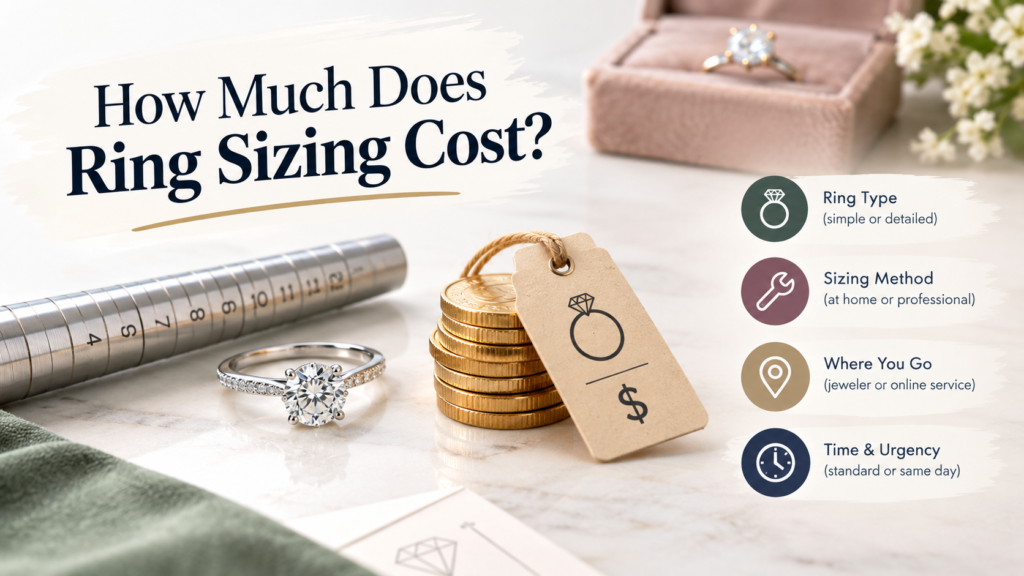
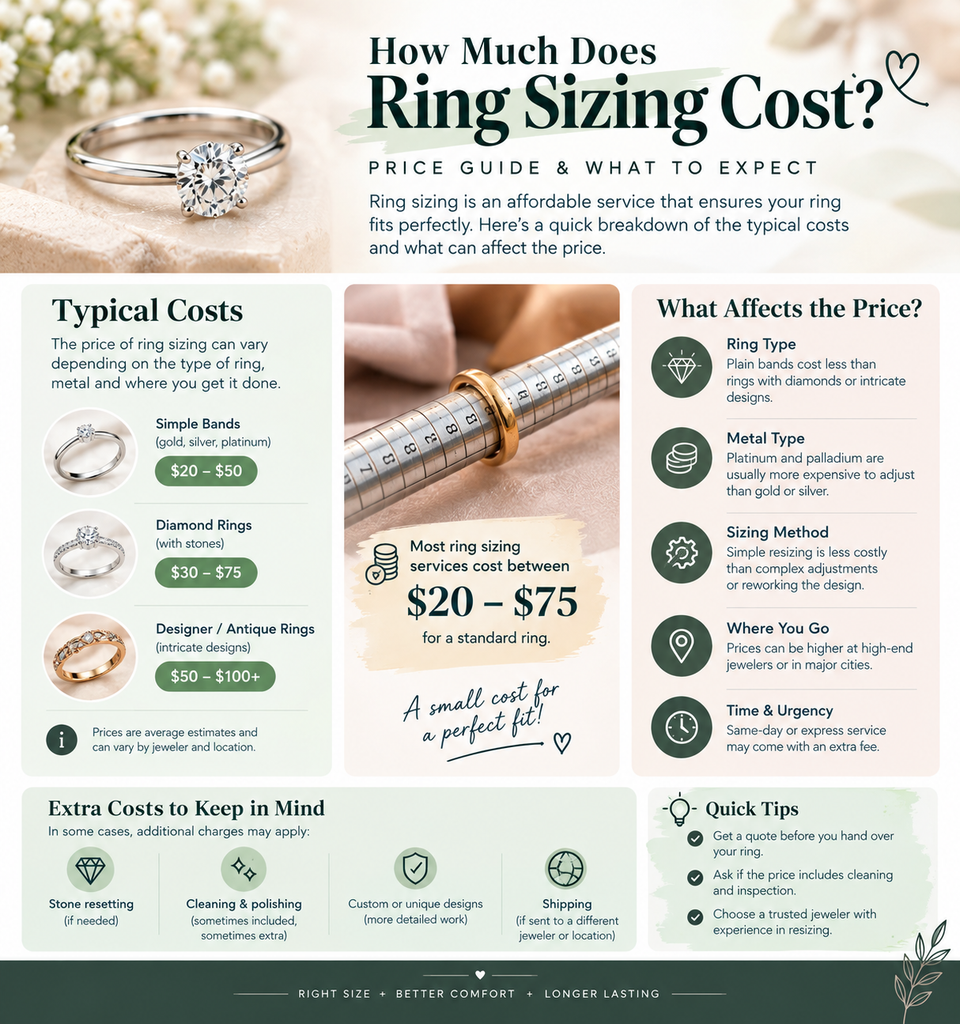
Ring sizing typically costs between $20 and $200, and the exact number depends almost entirely on three things: what metal the ring is made of, whether you are sizing up or down, and whether the band has stones or engraving that need to be worked around. A plain silver band on the low end and a platinum eternity ring on the high end are not really the same job, even though both get called ring sizing.
This guide breaks the cost down by metal, by direction, and by design, so you can walk into a jeweler with a realistic number in mind instead of guessing.
Average Cost at a Glance
Here is the short version before the details. Actual prices vary by jeweler and region, but these ranges hold up consistently across the industry.
| Ring Type | Typical Cost |
|---|---|
| Simple silver band | $20 to $60 |
| Gold band, no stones | $30 to $120 |
| Gold band with side stones | $80 to $180 |
| Platinum band, no stones | $50 to $200 |
| Platinum with stones or engraving | $150 to $300 or more |
| Tungsten, titanium, or ceramic | Usually not resizable |
Why Metal Type Changes the Price So Much
Not all metals respond to heat and pressure the same way, and that directly affects how much labor a resize takes.
Silver is the softest common ring metal and the easiest to reshape, which keeps labor time and cost low.
Gold, whether yellow, white, or rose, sits in the middle. It is malleable enough to resize without much difficulty, though white gold usually needs a fresh coat of rhodium plating afterward since the original layer often burns off at the point where the jeweler solders the band, which adds a modest amount to the final bill.
Platinum costs noticeably more to resize than gold, often close to double. It has a much higher melting point, so a standard torch will not do the job. Jewelers typically need a laser welder or a specialized high heat torch, along with more experience working the metal, and all of that shows up in the labor charge.
Tungsten, titanium, and ceramic are a different category entirely. These metals are prized for scratch resistance precisely because they are extremely hard, but that same hardness makes them essentially impossible to resize with standard jewelry tools. A ring in one of these metals that no longer fits usually has to be replaced rather than adjusted.
Sizing Up Costs More Than Sizing Down
This surprises a lot of people the first time they get a quote. Making a ring smaller is almost always cheaper than making it larger, and the reason comes down to materials rather than effort.
To size a ring down, a jeweler removes a small section of the band and resolders the ends together. No new material is needed.
To size a ring up, the jeweler has to add metal, cutting the band and inserting a matching piece before resoldering both seams. That added metal has to match the karat and color of the original ring closely, which takes both material cost and extra precision, and both of those get reflected in the price.
As a rough rule, expect sizing up to cost anywhere from twenty to fifty percent more than sizing down on the same ring.
How Much the Design Adds to the Cost
The band itself is only part of the story. What sits on top of it matters just as much.
A plain band with no stones and no engraving is the cheapest and fastest job a jeweler can do. Add side stones, and the price climbs, since each one may need to be loosened, protected, or fully removed and reset around the new seam. A full eternity band, where stones run the entire circumference, is one of the more expensive resizes possible, because there is no stone free section of metal left to work with at all. Detailed engraving adds cost too, since the pattern is often disrupted by the resize and has to be recreated by hand afterward.
As a general guide, a ring with side stones or engraving typically adds fifty to one hundred fifty dollars on top of the base metal price.
Is a Resize Ever Free?
Sometimes. Many retailers, particularly the larger chains, include one free resize within a set window after purchase, often ninety days to a year. Independent jewelers vary more, and some offer a free minor adjustment, typically a quarter to half a size, as a customer service gesture even outside a formal policy.
It is worth asking directly rather than assuming either way. If a free resize is available, confirm whether it covers only the band or also includes cleaning, polishing, and stone tightening, since some shops treat those as separate line items even under a free resize policy.
Getting an Accurate Quote
Prices can vary meaningfully between jewelers in the same city, so it is worth asking a few specific questions before committing to a shop.
Ask whether the quote includes cleaning and polishing afterward, since a resized ring often needs both to look finished. Ask whether stone tightening or resetting is included if your ring has side stones. And ask what happens if the resize reveals a problem partway through, such as a hidden crack or a weak solder joint from a previous repair, since a small number of shops will pause and requote rather than continuing without telling you.
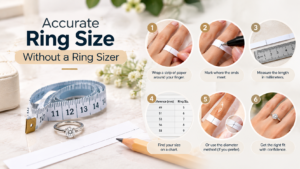
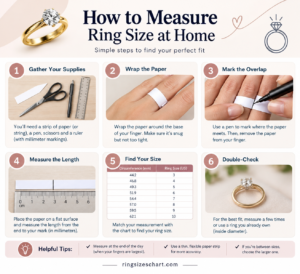
If you are not yet certain how much your size has actually changed, confirm it first with our free ring size calculator or by measuring with tape at home. Getting an accurate number before you visit a jeweler avoids paying for a resize that turns out to be the wrong direction or larger than actually needed.
When Resizing Is Not the Right Answer
Cost is not the only reason to think twice before resizing. If your ring has needed multiple resizes already, another one can weaken the band at the seam. And if you are dealing with a ring that no longer fits because of a more significant or ongoing change, our guide on what to do if your engagement ring no longer fits covers when a temporary fix or a full remake makes more sense than another resize.
Frequently Asked Questions
What is the cheapest way to resize a ring?
Sizing down a plain silver or low karat gold band with no stones is typically the least expensive resize, often landing at the twenty to forty dollar end of the price range.
Does ring sizing damage the ring?
A properly done resize by an experienced jeweler should not damage the ring. The main risk comes from a rushed job on a heavily set band, or from repeatedly resizing a ring that has already been worked on several times.
How long does ring sizing take?
Most standard resizes take anywhere from a few days to about two weeks, depending on the jeweler’s workload and whether stones need to be removed and reset.
Can a ring be resized more than once?
Yes, most bands can be safely resized two or three times over their lifetime. Beyond that, the metal at the seam tends to thin out, and a jeweler may recommend a rebuild instead of another resize.
Do online jewelers charge less for resizing than local shops?
Not necessarily. Online and mail in resizing services sometimes offer competitive pricing, but shipping a ring adds risk and turnaround time, so it is worth weighing the modest savings against the convenience and security of an in person jeweler.
Final Thoughts
Ring sizing cost comes down to a short list of factors: metal type, direction of the resize, and whatever sits on top of the band. A simple silver ring sized down might cost twenty dollars, while a platinum eternity band sized up could run several hundred. Knowing your exact starting size and getting a clear, itemized quote before any work begins is the easiest way to avoid an unexpected bill.