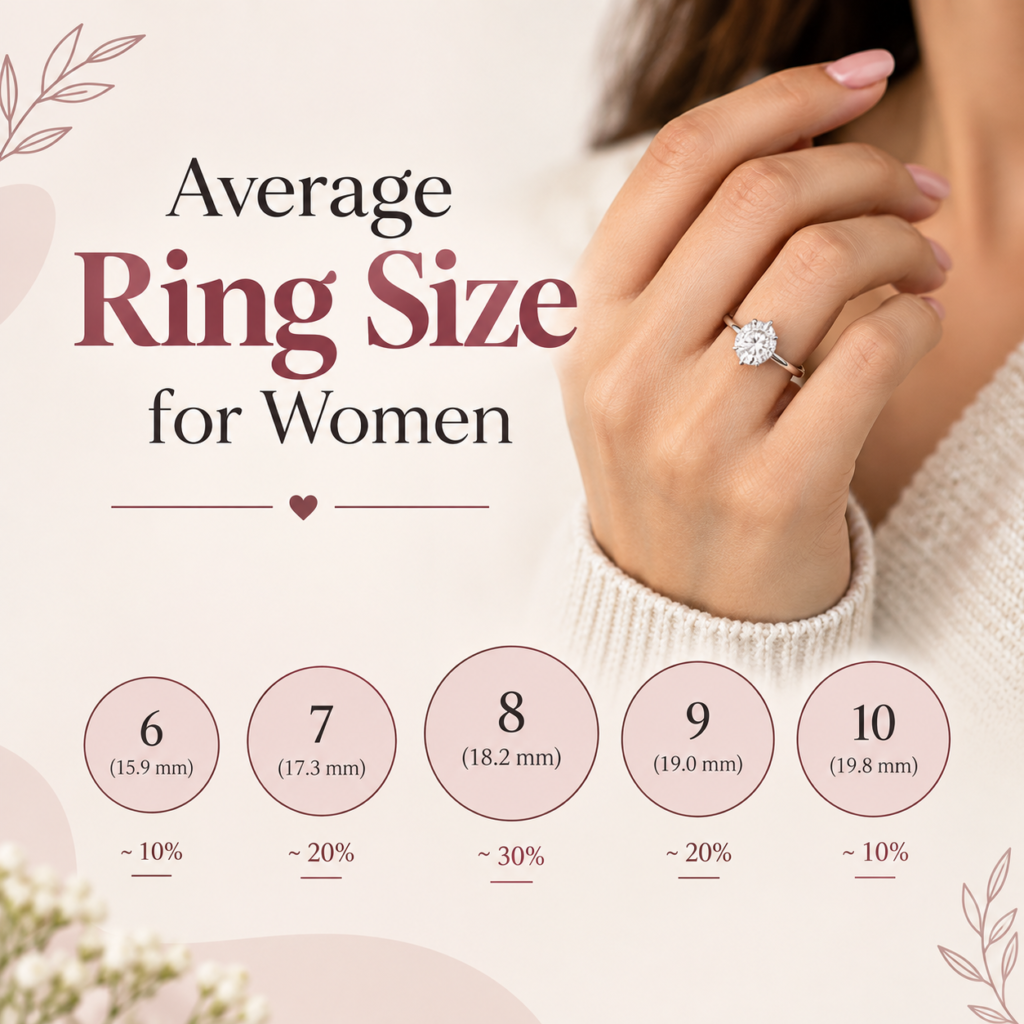
The average ring size for women is a US size 6, which is roughly a 16.5mm inner diameter, a UK size L, and an EU size 52. That single number gets repeated everywhere, but it only tells part of the story. Most adult women actually fall somewhere between size 4 and size 9, and the finger you are measuring changes the number just as much as the person wearing it.
This guide breaks the average down properly: by country, by age group, and by which finger you are actually sizing, so you walk away with a real number instead of a rounded guess.
The Short Answer: Average Ring Size for Women
Across the sizing systems jewelers use worldwide, women’s ring finger measurements cluster in a fairly tight band. Here is how that average reads across the systems you are most likely to encounter while shopping.
| Sizing System | Average Size | Equivalent Diameter |
|---|---|---|
| US / Canada | 6 | 16.5mm |
| UK / Australia | L | 16.5mm |
| EU | 52 | 51.9mm |
| Japan | 12 | 16.5mm |
| Indonesia | 10 | 16.5mm |
That said, “average” here means the single most commonly purchased size, not the size everyone should buy. Roughly half of adult women wear something noticeably smaller or larger than a US 6, which is exactly why a proper measurement beats a national average every time. If you want your own exact number rather than a population wide guess, our free ring size calculator converts a home measurement straight into US, UK, EU and Japan sizes in one step.
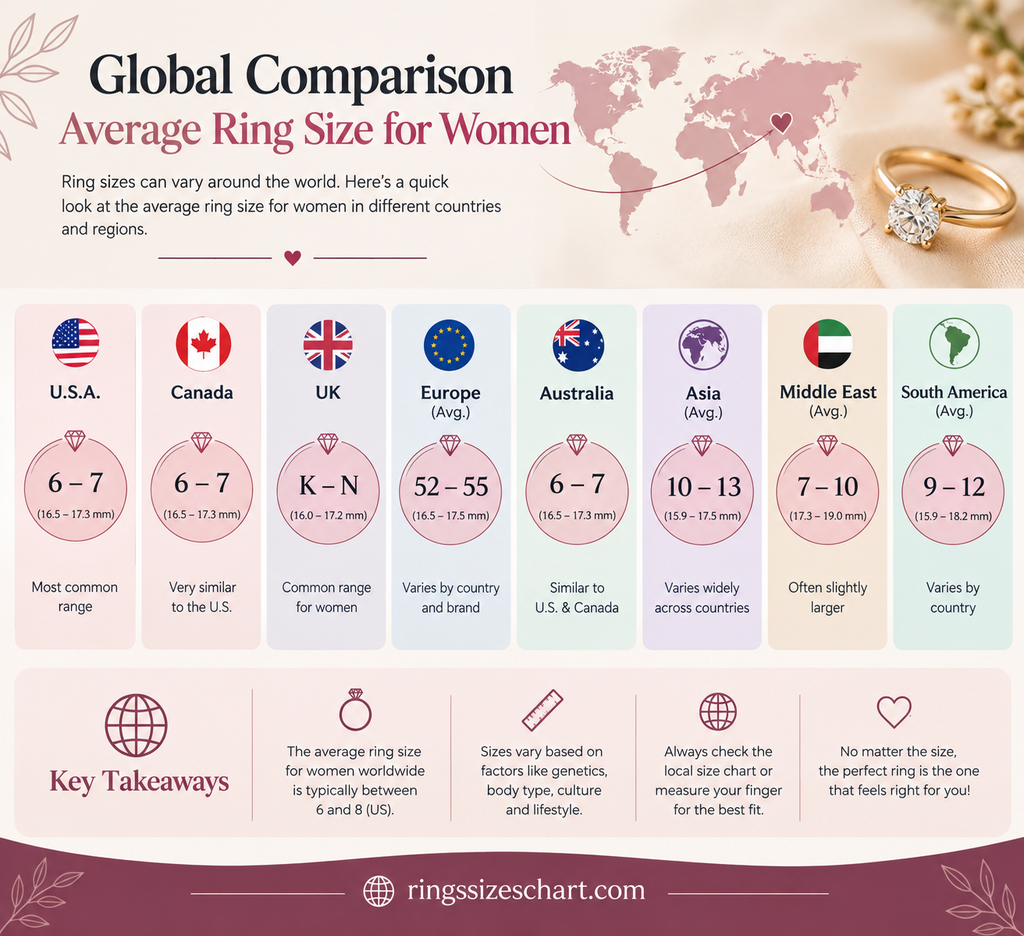
Average Ring Size by Country
Averages shift a little depending on where you are shopping, partly because of genuine population differences and partly because each region built its sizing scale around a slightly different reference point.
United States and Canada: Most women fall between size 5 and 7, with size 6 the single most purchased size at major US retailers.
United Kingdom and Australia: The equivalent range runs from J to N, with L as the midpoint. Since UK ring sizing uses letters rather than numbers, it is worth double checking the conversion before ordering from a UK based jeweler.
Europe: European sizes are based directly on circumference in millimeters, so the average sits around 49 to 55, with 52 as the center point.
Japan: Japanese sizing runs on its own numeric scale from roughly size 9 to size 13 for the average adult woman. If you are converting a size from a Japan ring size chart, remember the scale itself does not use half sizes the way the US system does.
Indonesia: Local jewelers commonly use the same broader Asian numeric scale, with the average adult woman’s size falling around number 10 to 14. A full breakdown of the local conversion is available on our Indonesia ring size page.
None of these numbers replace an actual measurement. They exist to give you a sanity check, a way to notice quickly if a size you have been quoted seems unusually far off from what most women in that region actually wear.
Does Average Ring Size Change With Age?
Age itself does not change bone structure, but the things that tend to happen over the course of a life often do change finger size gradually.
Women in their late teens and early twenties commonly measure on the smaller end of the range, often size 4 to 6, since bone density and finger width are still settling into their adult proportions. Through the thirties and forties, gradual weight changes, water retention, and general joint changes push the average up slightly, commonly into the size 6 to 7 range. After menopause, joint changes around the knuckle are common, and many women find their comfortable size increases by half a size to a full size compared to their twenties, even without significant weight change.
None of this is a rule. Genetics plays a much larger role in finger size than age does, and plenty of women keep the same ring size for decades. It is simply useful context if you are buying for someone and only know their age bracket, not their exact measurement.
Why Averages Do Not Predict Your Actual Size
An average is calculated across millions of very different hands, so it naturally smooths over the details that decide your real fit.
Bone structure and knuckle size. Two women with identical finger length can still need different ring sizes if one has a noticeably larger knuckle, since the ring has to pass over that knuckle to reach the base of the finger.
Height and overall build. Taller women and women with a larger overall frame tend to run slightly larger through the fingers, though this correlation is loose enough that it should never replace an actual measurement.
Dominant hand. Your dominant hand is very often a quarter to half a size larger than your non dominant hand, from years of extra use. If you are unsure which hand a ring is intended for, this is one of the more common reasons a “correct” size ends up feeling slightly off.
Pregnancy and hormonal changes. Fluid retention during pregnancy can temporarily increase ring size by a full size or more, which is why many women stop wearing rings during the later stages and resume their normal size after.
Climate and time of day. Fingers genuinely measure smaller in the cold and larger in heat or after exercise, sometimes by close to half a size within the same day.
Average Ring Size by Finger, Not Just by Person
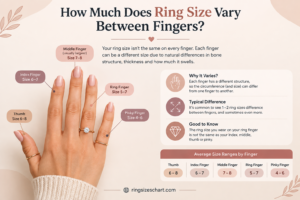
This is the part most size charts skip entirely, and it matters more than most people expect. The same woman does not wear one ring size, she wears a different size on nearly every finger.
Ring finger (fourth finger): This is the finger most engagement and wedding size averages are built around, and it is usually close to, but not always identical to, the overall average discussed above.
Middle finger: Typically half a size to a full size larger than the ring finger on the same hand, since the middle finger is usually the longest and often the widest at the knuckle.
Index finger: Commonly similar to or slightly larger than the middle finger, though this varies more from person to person than the other fingers do.
Pinky finger: Almost always the smallest finger on the hand, often a full size and a half to two sizes below the ring finger.
Thumb: Frequently the largest circumference on the hand despite being the shortest, since thumbs tend to be noticeably wider at the base.
If you already own a ring that fits a different finger well, resist the temptation to assume it will fit your ring finger too. Measuring the actual finger you plan to wear the new ring on is the only way to avoid an unpleasant surprise.
How to Find Your Actual Size Instead of Guessing From an Average
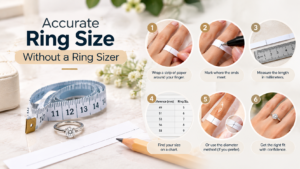
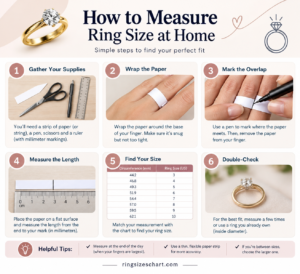
Averages are a starting point for browsing, not a substitute for measuring. The fastest reliable method at home uses a strip of paper or a piece of non stretchy string.
Wrap it snugly around the base of the finger you intend to wear the ring on, mark where the ends meet, then lay it flat against a millimeter ruler. That number is your circumference, and it converts directly to a size using the table earlier in this guide, or instantly through our ring size calculator if you would rather skip the math.
If you are sizing for a wedding band specifically, it is worth checking our dedicated wedding ring size chart as well, since band width changes how snug a given size actually feels once it is on your finger.
Frequently Asked Questions
What is the most common ring size for women?
US size 6 is the single most frequently purchased women’s ring size at major retailers, though sizes 5 through 7 together account for the large majority of adult women’s rings sold.
Is a size 7 ring big for a woman?
No. A size 7 sits comfortably within the normal adult range for women and is only slightly above the size 6 average, not an unusually large size.
What is the smallest common ring size for a woman?
Size 4 is generally considered the smallest common adult size, though some women, particularly those with a petite frame, measure as low as size 3.
Can I use my shoe size to guess my ring size?
Not reliably. Shoe size and ring size come from different parts of the body and do not correlate closely enough to use as a real substitute for measuring your finger directly.
Does the average ring size differ between the left and right hand?
Yes, in most people. The dominant hand tends to measure a quarter to half a size larger due to years of additional use, so it is worth measuring the specific hand and finger you plan to wear the ring on.
Should I size up or down if my measurement falls between two sizes?
Sizing up is usually the safer choice, especially for a wider band, since a slightly loose ring can be resized down more easily by a jeweler than a tight ring can be resized up.
Final Thoughts
The average ring size for women, a US 6, is a useful starting point when you have no other information to go on. It is not a substitute for measuring the actual finger a ring is meant for, since country, age, hormonal changes and even which finger you choose can shift the real number by a size or more in either direction. When it actually matters, for an engagement ring, a wedding band, or any gift you cannot easily return, take five minutes and measure properly rather than trusting the average alone.