
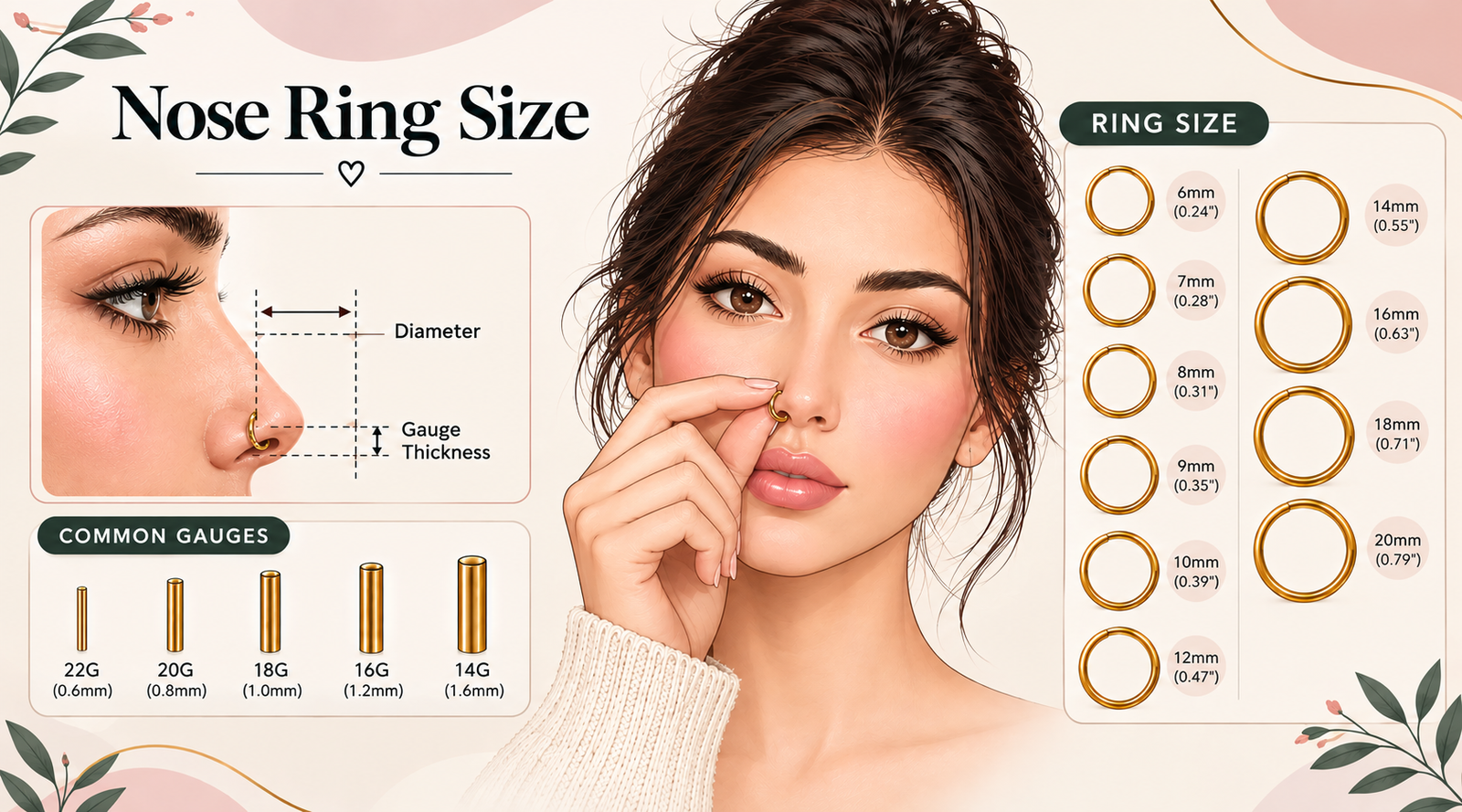
Nose ring sizing depends on three separate measurements: gauge, diameter, and post length. Getting even one of these wrong can mean a ring that will not fit the piercing, sits uncomfortably, or looks too small or too large for your face. Use the charts and guides below to find the exact fit before you buy.
Nose ring size covers three different measurements, and knowing which one applies to your jewelry matters.
Buying the correct gauge is the most important step, since a ring with the wrong gauge simply will not fit through the piercing at all, regardless of diameter or post length.
This chart shows the most common gauge sizes used for nose piercings, along with their measurement in millimeters and inches.
| Gauge | MM | Inches | Common Use |
|---|---|---|---|
| 22G | 0.6 mm | 1/40″ | Thinnest common size, used for fresh or delicate piercings |
| 20G | 0.8 mm | 1/32″ | Most common nostril piercing size |
| 18G | 1.0 mm | 3/64″ | Slightly thicker, common for standard nostril jewelry |
| 16G | 1.2 mm | 1/16″ | Frequently used for septum piercings |
| 14G | 1.6 mm | 5/64″ | Thickest common size, mostly used for septum jewelry |
Gauge numbers work in reverse of what most people expect. A smaller number means a thicker post, so 14G is thicker than 22G. Most nostril piercings fall between 18G and 20G, which is why these two sizes make up the majority of nose studs sold.
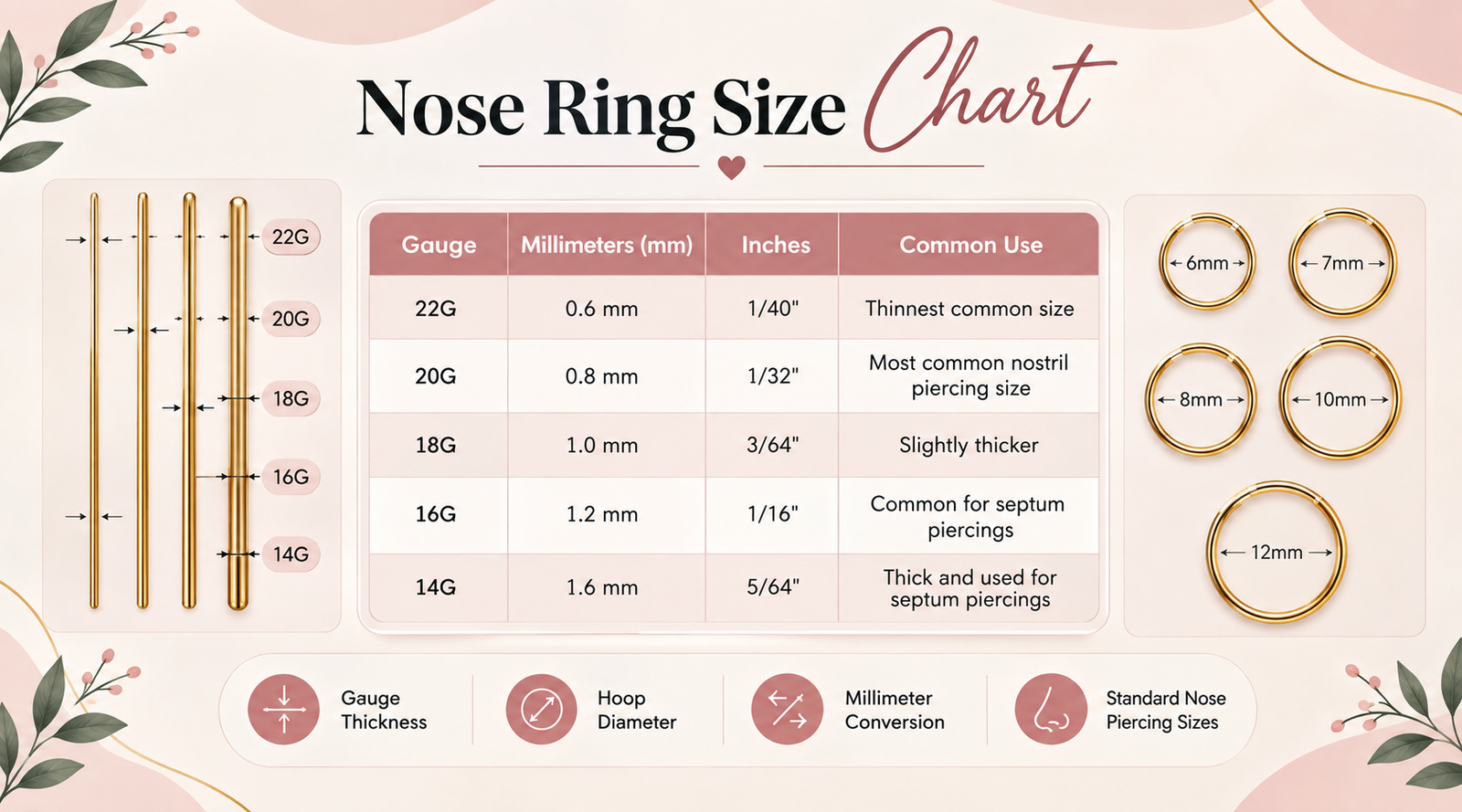
Once gauge is confirmed, diameter determines how the hoop actually sits on your nose. This chart lists common diameters and the look each one creates.
| Diameter (mm) | Fit and Look |
|---|---|
| 5 mm | Extremely snug, sits tight against the nostril with almost no gap |
| 6 mm | Very small, close fitting hoop with a minimal gap |
| 7 mm | Small, one of the most popular everyday sizes |
| 8 mm | Medium, the most common and universally flattering size |
| 9 mm | Medium to large, slightly more visible than an 8mm hoop |
| 10 mm | Large, creates a noticeable gap from the nostril |
| 12 mm and above | Extra large, worn for a bold, statement look |
When comparing gauge sizes, the order from thinnest to thickest jewelry runs like this:
22 gauge, then 20 gauge, then 18 gauge, then 16 gauge, then 14 gauge.
Since gauge numbers count down as thickness increases, 22G is the smallest size and 14G is the largest among common nose jewelry. If you are buying your first nose ring, you generally do not need to worry about sizes outside 18G to 20G, since that range covers most standard nostril piercings. Gauge and diameter are specific to nose jewelry, but the idea of measuring carefully before you buy applies across every type of body jewelry. If you are also picking out a toe ring, that sizing follows a completely different US number scale rather than gauge, so it is worth checking that guide separately rather than assuming the same numbers apply.
There are several reliable ways to figure out your correct size without guessing.
If you still have the nose ring your piercer used, check the packaging or box it came in. The gauge and post length are usually printed directly on it.
A digital caliper gives the most precise reading at home. Measure the thickness of the post directly and compare the number to the gauge chart above.
Wrap a thin strip of paper around the piercing hole, following the curve of the nostril from front to back. Mark where the ends meet and measure the length in millimeters. This gives a rough estimate of the diameter needed for a hoop.
For guaranteed accuracy, especially with a fresh piercing, your piercer can measure gauge, diameter, and post length in a few minutes using professional tools.
Before ordering, run through these quick questions to avoid picking the wrong piece.
The most accurate way is to have a piercer measure it directly. At home, a digital caliper or the paper strip method can give you a close estimate.
Most nostril piercings use either 18G or 20G, with 20G being the more common standard size for new piercings.
No. A 7mm hoop is a popular choice for a close fitting, everyday look and works well on most nostril sizes.
An 8mm hoop gives a classic, everyday fit that sits close to the nostril. A 10mm hoop creates a bolder look with a visible gap. The right choice comes down to personal style.
A ring with a thicker gauge than your piercing will not fit through the hole, while a much thinner gauge may fit too loosely and irritate the piercing over time.
Yes. A post that is too long can shift, rotate, or catch on clothing, while one that is too short may not sit securely. Piercers often trim a longer post down once the piercing has healed.
Sometimes. Swelling from a fresh piercing may require a slightly longer post at first, which can often be swapped for a shorter one once healing is complete.
For a standard nose piercing, 18G (1.0 mm) or 20G (0.8 mm) is commonly used.
For a fresh piercing, it’s best to have a professional piercer choose the gauge based on your anatomy and the type of jewelry you want to wear.
